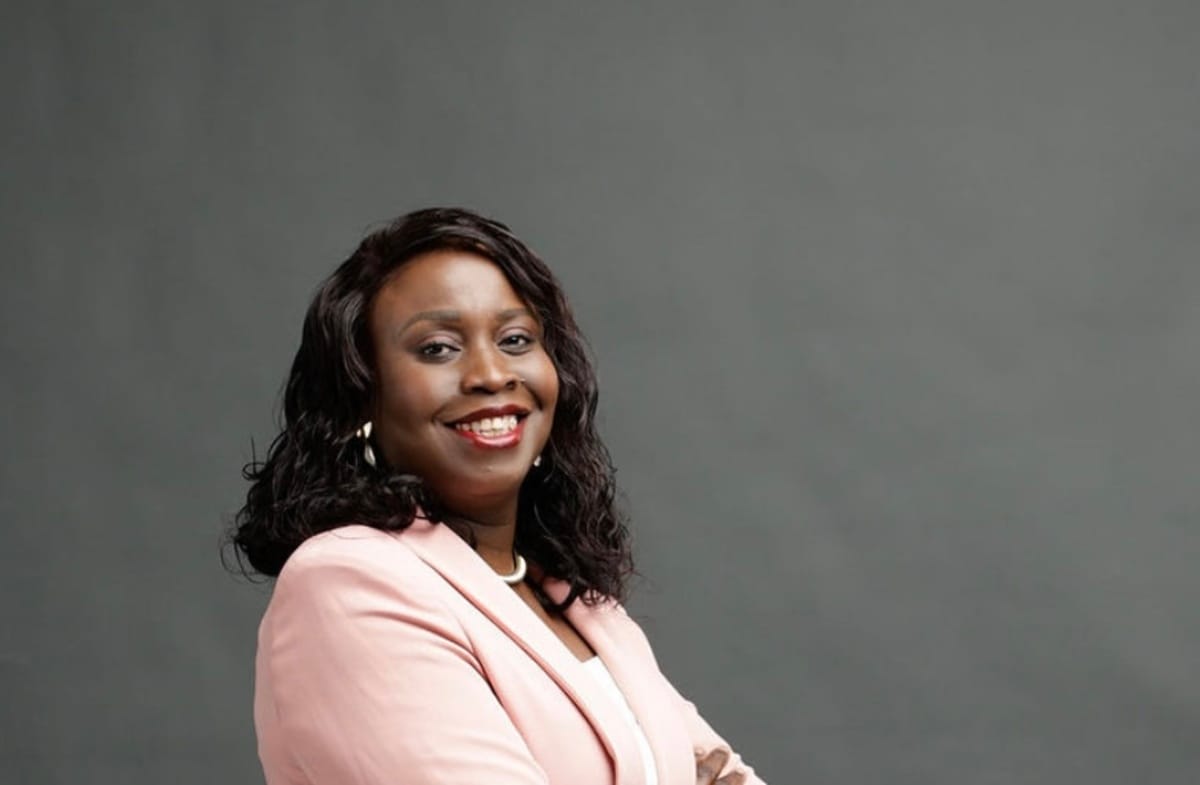

Over the past year, The Journovator has introduced you to some of the people shaping media innovation across Africa.
These journalists are challenging some assumptions that have guided our industry for years. Their innovations range from building new platforms and rethinking how journalism reaches audiences to experimenting with AI and finding new ways to remain sustainable.
This week, I’m looking back at the people we have profiled recently.
What I’ve learned from their stories is that innovation often begins with one person asking a better question, pushing back on “the way we’ve always done it”, or finding a practical solution to a problem their newsroom can no longer ignore.
We’ve compiled all our recent innovator profiles into one online page to make it easier to explore their stories and return to the ideas that resonate with you.
So, whether you have been reading from the beginning or have only recently joined us, here are some of the people helping to build the future of African media.
You can also see the previous ones here.
Duclair Fopa, a 23-year-old Cameroonian founder, is building InReach, an AI-powered browser extension that translates digital content into sign language in real time across more than 200 languages. Once installed, it works across different platforms without requiring websites or systems to be redesigned, and he describes it as similar to “Grammarly for accessibility.”
Fopa’s innovation challenges the assumption that captions alone make digital content accessible, as they can lose tone, context and emotional emphasis.
Together with his two co-founders, he is developing reverse functionality that translates sign language into text. Their ambition is to make the internet instantly accessible to deaf users and turn accessibility from a niche feature into essential digital infrastructure.
Titilope Fadare, a Nigerian journalist and AI trainer, set out to make generative AI practical and accessible for journalists. Through her Generative AI Journalism programme, she uses live demonstrations, step-by-step walkthroughs and YouTube tutorials to show journalists how AI can support real newsroom tasks.
Her work challenges the idea that AI is too technical, a threat to jobs or a shortcut that undermines journalism. Fadare argues that AI literacy, prompting and verification are now essential journalism skills, enabling African journalists to use existing tools responsibly while keeping editorial judgment and ethics firmly at the centre.
Anis Belmili, an Algerian journalist, team leader at EPTV and presenter of the technology programme iTech 2.0, is experimenting with AI-generated video, translation, voice synchronisation, research and newsroom workflows, largely through his own initiative. He uses his show as a testing ground, demonstrating how convincing synthetic media can be while helping viewers understand why it should be approached critically.
His work shows both the value and limits of individual experimentation. Journalists can demonstrate what AI makes possible, but responsible, lasting transformation requires newsroom leadership, training, secure systems and clear editorial guidance.
Dr Mercy Korir, a Kenyan medical doctor turned journalist, founded Willow Health Media, a digital-first newsroom that makes health journalism clearer, more accessible and relevant to how people consume information today. Willow puts health at the centre, using video-first storytelling, multiple formats and translation to reach audiences where they are.
The newsroom uses AI to support research, summarising, editing and production, while editorial judgment remains in human hands. Korir’s model shows that effective health journalism not only needs to be accurate, but also accessible, trustworthy, and culturally contextualised. Through Willow, she is also building a pipeline for the next generation of health journalists across Africa.
Audrey Likound and her team at Istorias Médias in Abidjan are using comedy to confront online hate speech. Their podcast, Laissons parler les gens, brings together comedians, musicians, influencers and athletes to speak honestly about how hateful comments affect their lives and careers.
Hosted by popular comedian and radio presenter Clentelex, the show uses humour to reach young West Africans who may not respond to lectures.
The team carefully drafts and reviews each episode, removing jokes that could cause further harm. Their aim is to make difficult conversations easier to enter while encouraging audiences to pause before posting cruel comments online.
Sipho Kings and his team built The Continent, an award-winning weekly newspaper designed to be read and shared on WhatsApp. Launched during the COVID-19 pandemic, it responded to rising misinformation and shrinking newsrooms with a tightly edited publication that places African audiences at the centre. Its short stories, lightweight PDF and curated weekly format are designed to be read from start to finish.
With 33,000 subscribers and an estimated 150,000 weekly readers through person-to-person sharing, The Continent challenges digital journalism’s obsession with clicks, endless content and algorithmic reach. Its success shows the value of one useful, trusted and consistent product.
🚀OPPORTUNITIES WORTH KNOWING
The good stuff: upcoming events, grants, training programs, jobs, and more
AIJC Francophone Investigative Journalism Fellowships 2026
Fully funded support (travel, accommodation, meals, etc.) for French-speaking investigative journalists from specified francophone African countries to attend the conference in Nairobi (10–12 November 2026). Fellows must produce at least one investigative piece afterward.
Deadline; 4 September 2026.
Harvard Radcliffe Institute Fellowship 2027–2028
The fellowship offers a dedicated nonfiction and journalism application track with a deadline of 10 September 2026, providing a $78,000 stipend, project support, housing assistance, relocation support, and childcare funding for a full academic year at Harvard.
Deadline: 10 September
Strategic Communications Advisor, Oxfam in Africa
This is a dynamic and high-impact role at the heart of Oxfam’s influencing work. You will shape and deliver strategic communications that enhance the Director’s profile, ensuring their engagements, ranging from high-level summits to media appearances, are impactful, coherent, and aligned with Oxfam’s priorities.
Merck Foundation Africa Media Recognition Awards 2026
The Merck Foundation Africa Media Recognition Awards recognise journalists and media professionals across Africa for published work that raises awareness on key social issues, with winners receiving USD 500 per category across print, online, radio, and multimedia formats. Category one ("More Than a Mother") covers breaking infertility stigma, girl education, women's empowerment, ending child marriage, ending FGM, and stopping GBV, with a deadline of 30 September 2026; category two ("Diabetes & Hypertension") covers prevention and early detection awareness, with a deadline of 30 October 2026.
Deadline: 30th October
FIJ grants
The Fund for Investigative Journalism offers grants for freelance journalists, staff reporters, and media outlets producing high-quality, nonpartisan investigative stories, for print, online, broadcast, books, documentaries, or podcasts.
Deadline: September 14, 2026.
This Issue Brought to You By Reebo Consult
We work with media organisations to turn big ideas into real impact — integrating AI, navigating digital shifts, and rethinking editorial strategy for the future. Curious about what that could look like for you? Let’s connect. Send me an email.
Help us keep sharing real stories
▶ Know someone who’d love this? Forward it their way.
▶ Was this email forwarded to you?